



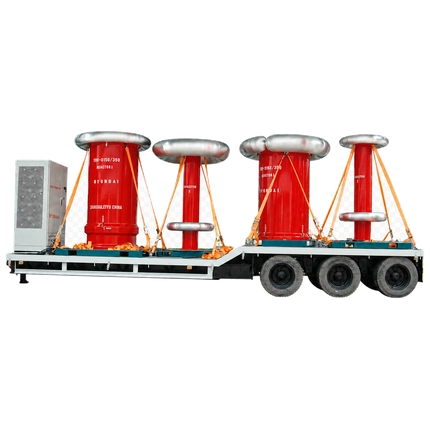
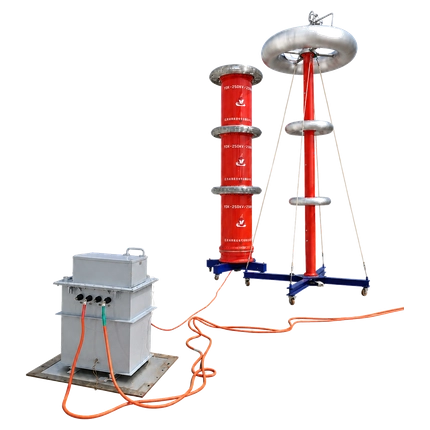
Frequency-Tuned Series Resonance Test System
Product Overview
The VERXON Frequency-Tuned Series Resonant Test System establishes resonance by adjusting the output frequency to match the capacitance of the test object and the system reactor. It is primarily designed for onsite AC withstand voltage testing of high-capacitance electrical equipment.
The operating frequency and system configuration are selected according to the test object, applicable standard and project requirements.
Applications
SF6 circuit breaker testing
GIS onsite AC withstand voltage testing
Power cable and cable accessory testing
Power transformer partial discharge testing
Coupling capacitor testing
Zinc oxide surge arrester testing
Testing of other high-capacitance electrical equipment
Product Features
Adjustable test frequency according to the test requirements
Compact and lightweight system configuration
Resonant operation helps reduce the required input power capacity
Low-noise and low-partial-discharge design
Reduced risk of transient overvoltage after test-object flashover
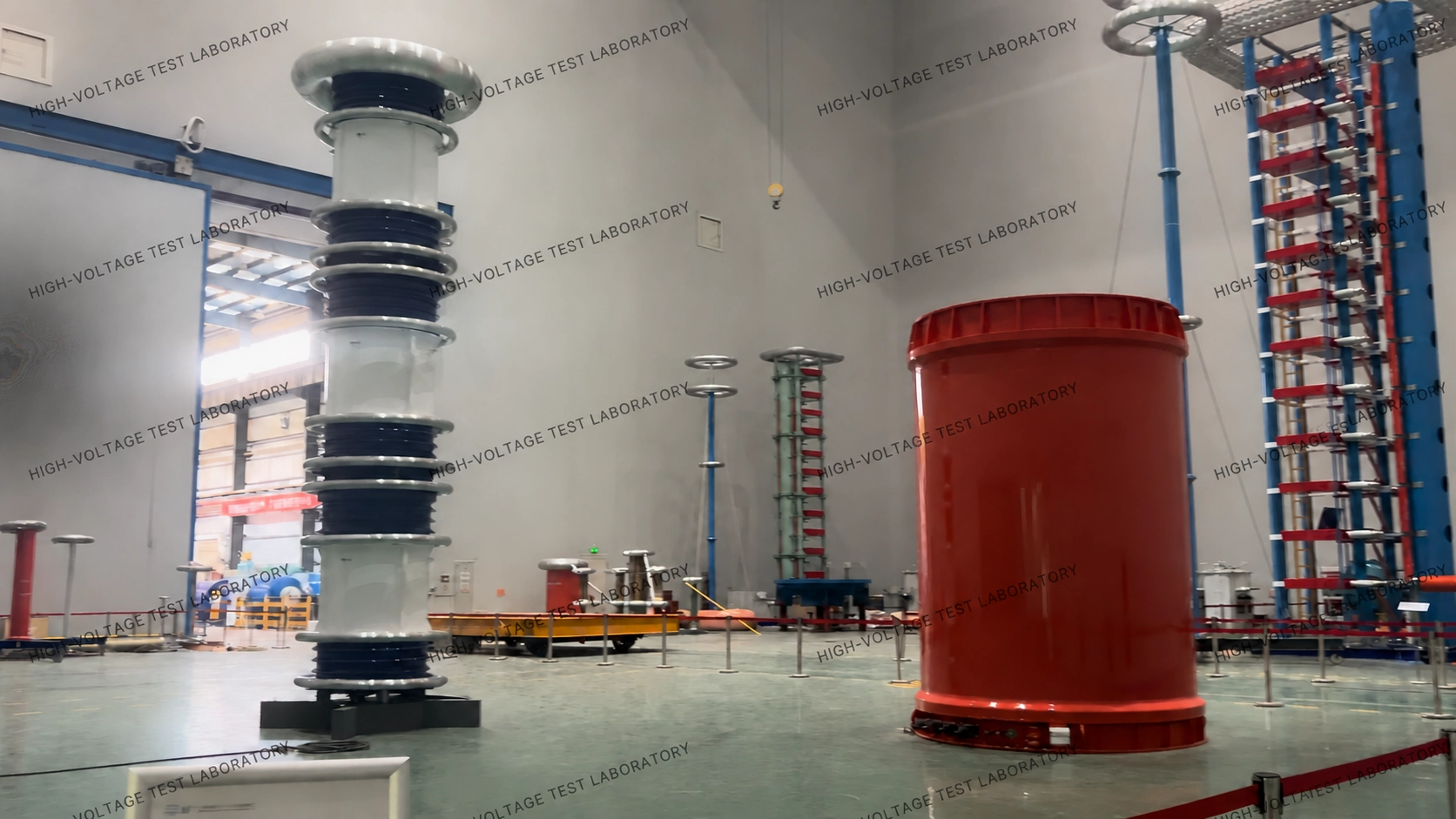
Suitable for onsite and laboratory applications
System ratings configurable according to the test object
Working Principle
The frequency of the excitation source is adjusted until the reactor and the capacitance of the test object reach resonance. This allows the system to generate the required AC test voltage with substantially lower input capacity than a conventional test source.
Frequently Asked Questions
What is a Frequency-Tuned Series Resonant Test System?
It is an AC high-voltage test system that establishes resonance by adjusting the test frequency to match the reactor and test-object capacitance.
How is the operating frequency selected?
The operating frequency is selected according to the test object, applicable standard and agreed technical requirements.
Which equipment can be tested?
The system can be configured for GIS, SF6 circuit breakers, power cables, transformers, coupling capacitors, surge arresters and other high-capacitance electrical equipment.
Can the system perform partial discharge tests?
Yes. With a suitable low-interference configuration, the system can support partial discharge testing.
Why is the required input capacity lower?
Under resonant conditions, the excitation source mainly supplies system losses, so the required input capacity is lower than that of a conventional test source.