



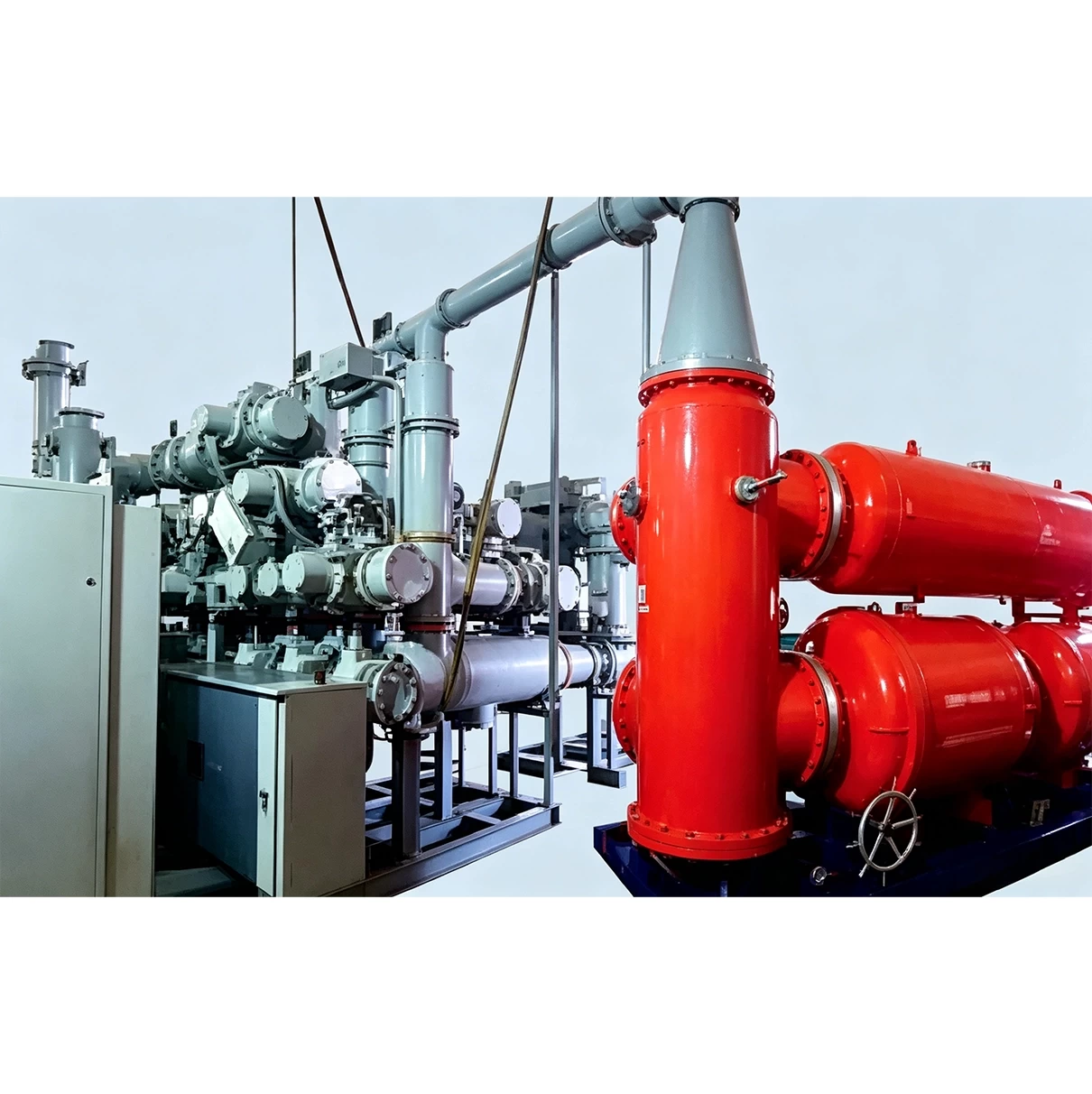
Gas reactor
Product Overview
The VERXON Gas-Insulated Test Reactor is designed for reactive-power compensation and resonance matching in high-voltage AC test systems. It works with the capacitance of the test object and the test power supply to establish resonant conditions and reduce the required input capacity.
The reactor rating, inductance range, operating frequency and connection method are selected according to the test object and system requirements.
Applications
GIS and GIL AC withstand voltage testing
Partial discharge testing
Power transformer testing
Power cable and cable accessory testing
Bushing testing
Testing of other high-capacitance electrical equipment
Product Features
Low background partial discharge
Stable resonance performance
Wide operating-frequency adaptability
Compact gas-insulated structure
Flexible series or cascade connection
Configurable inductance and current ratings
Suitable for integration into series resonant test systems
Working Principle
The reactor and the capacitance of the test object form a resonant circuit. Under resonant conditions, reactive power circulates between the reactor and the test object, reducing the capacity required from the excitation power supply.
Frequently Asked Questions
What is a Gas-Insulated Test Reactor?
It is a gas-insulated high-voltage reactor used for reactive-power compensation and resonance matching in AC withstand voltage and partial discharge test systems.
Why is a test reactor used?
The reactor compensates for the capacitance of the test object, helps establish resonance and reduces the required input power capacity.
Which test objects are suitable?
The reactor can be configured for GIS, GIL, transformers, power cables, bushings and other high-capacitance electrical equipment.
Can several reactors be connected together?
Yes. Series or cascade connections can be selected according to the required test voltage, current and inductance.
Can the reactor be customized?
Yes. The inductance range, current, voltage rating, frequency range and connection method are determined according to the test system and project requirements.